Sunday, April 29, 2018

Fur Seal Meets Penguin: The Hunter vs. The Hunted

Seasonally abundant populations of some organisms are important to the ecosystem in which they are seasonally abundant. If the populations are over-hunted or over-bred, the ecosystem will be put out of balance and begin to degrade. Such an example is the Adélie penguin and Chinstrap penguin. They are relatively common in Antarctic waters, but recent work shows the importance to ecosystems common species. If the species were to decline even a little, the function, services, and structure of the ecosystem could collapse. The authors of this paper observed several encounters between the penguins (usually juvenile fledglings) and Antarctic fur seals.

The authors knew that the seals have hunted penguins before because it was done in an efficient, effective manner, and it did not look as though it was the seals first time at hunting penguins. They observed that after the catch, the seals would shake the penguin, ripping chunks of flesh, skin, and feathers off, swallowing the chunks. The authors observed a seal eating a carcass, but could not ascertain whether or not the seal killed or scavenged it. The authors also observed various sea birds taking advantage of the seals expertise in acquiring a penguin, and one bird (a Giant Petrel) actually “stole” a penguin carcass from a fur seal. The bird and the seal both had a carcass and were observed to be eating the flesh or stomach contents of the bird. It is possible that these hunting events occur wherever the penguins and fur seals ranges overlap.

Figure 1. A subadult male fur seal grasping a fledgling Adelie penguin (Photo by INV)

The two types of penguins and the fur seals are all common species in the Antarctic, and they overlap quite profusely. It is unknown how or why the fur seals hunt the penguins. It is possible that they learned their technique from Giant Petrels or other species of seals, such as the Leopard Seal which is known to regularly hunt penguins. The authors think it is possible that the seals supplement their typical diet with penguins in an opportunistic manner. They also think that penguin predation is a more regular occurrence than previously recognized due to the high amount of penguin feathers in seal scat.

 When examining the scat of many different seals from several different islands, it was found that the seals diet was predominately penguin with some krill (due to the pink coloration). Species of penguin was undetermined. The high amount of predation is thought to be near the end of the season when fledgling chick’s numbers are high and adults are returning from hunting, thus having a full stomach. This may suggest that penguins are actually an important part of the seals diet, and not just an opportunistic meal. If the fledglings are targeted only in an opportunistic manner, long term effects will be minimal. However, if they are targeting adult penguins, the effect will hit both the adults and the chicks, decreasing populations sizes overall. This could affect penguin ecology in general. 

Although this entire paper was based off of a few observations of fur seals preying on penguins thus making it partially biased, it may also indicate an increase in fur seal predation on penguins that are seasonally abundant, and this could cause a long-term decline in penguin numbers if the seals and their preying ways continue to increase. This paper was designed in the hopes of encouraging other naturalists to document observations such as these. It would be of great value for scientists to conduct systematic observations at different locations to determine the scope of this predation in its entirety.

References 

Orca Research Trust - Scientific Articles

Sunday, April 8, 2018

New Species of Lobsters Prompt Re-Analysis of Kiwaid Biogeographical History

Recently two new species of kiwaid squat lobsters were found on hydrothermal vents in the Pacific Ocean and in the Pacific sector of the Southern Ocean. Finding these two new species had prompted the re-analysis of the kiwaid bio-geographical history. These squat lobsters are commonly known as "Yeti crabs." The yeti crabs get most of their nutrition from chemosynthetic episymbiotic bacteria growing on setae on their ventral surface and appendages. All but one species of kiwaid have been collected from hydrothermal vents. The other species, Kiwa puravida, was collected from cold seeps on the Pacific continental slope near Costa Rica. All the species were found in the Pacific or the Pacific sector of the Southern Ocean; however one species, Kiwa tyleri, is found in mass amounts at vents on the East Scotia Ridge in the Atlantic sector of the Southern Ocean.
Figure 1: Photos of known Yeti crabs.
 A) Kiwa puravida B) Kiwa sp. Galapagos Microplate C) Kiwa araonae D) Kiwa hirsuta E) Kiwa tyleri (F) Kiwa sp. SWIR
Scale bars are an approximation and represent 10 mm.
The first new species to be discovered was found on hydrothermal vents on the Galapagos Microplate and is called Kiwa sp. GM. The Galapagos Microplate is a distinct spreading system between the Galapagos Rift and the northern and southern portions of the East Pacific Rise. The second species is known as Kiwa araonae. This species is found on vents on the Australian-Antarctic Ridge in the southwest Pacific sector of the Southern Ocean. The discovery of this species widens the original known range of the Yeti crabs by ~6,500 km. This discovery suggests that the spread of the Yeti crabs is more complicated than previously believed. This discovery also suggests that the original seep-to-vent evolutionary progression may be wrong.
Figure 2: Map showing locations of kiwaids and the Cretaceous stem lineage fossil Pristinaspina gelasina in relation to land-masses and mid-ocean ridges.
Kiwaid are: i) Kiwa puravida, ii) Kiwa sp. GM, iii) Kiwa hirsuta, iv) Kiwa araonae, v) Kiwa tyleri, vi) Kiwa sp. SWIR.
Abbreviations are: NEPR = Northern East Pacific Rise; SEPR = Southern East Pacific Rise; GR = Galapagos Rift; GM = Galapagos Microplate; PAR = Pacific-Antarctic Ridge; AAR = Australian-Antarctic Ridge; CR = Chile Rise; ESR = East Scotia Ridge; AmAR = American-Antarctic Ridge; SWIR = Southwest Indian Ridge; CIR = Central Indian Ridge; SEIR = Southeast Indian Ridge; MAR = Mid-Atlantic Ridge.
The researchers found through many tests that Kiwaidae most likely originated in the Pacific. The researchers also found that the pattern of divergence could be closely linked to the evolution and movement of mid-ocean spreading ridges supporting hydrothermal vent habitats. Kiwaids, minus the one species mentioned earlier, are found only at hydrothermal vents along with BEAST analysis indicates that the common ancestor most likely inhabited the vents. They found that in other vent-associated taxa appeared consistent with movement and evolution of active spreading ridges. While there are puzzling reasons to why there are Yeti crabs are in certain areas there is also puzzling questions to why they are not in other areas.
Figure 3: The present-day configuration of mid-ocean ridges in the tropical East Pacific and the location of all currently known kiwaids
Yeti crabs are expected to be in areas such as vents along both the Galapagos Rift and the southern EPR, however they are absent from these. These vents have been majorly explored and no kiwaids have been found in them to this day. This study was done to include the two newest species and add on to a report previously done that included the previous four species. The research recently done does support the earlier inference to East Pacific origin. The research also shows that the divergence estimates are broadly similar to previous studies. 

Source for paper and figures 1-3:
Roterman CN, Lee WK, Liu X, Lin R, Li X, et al. (2018) "A New Yeti Crab Phylogeny: Vent Origins with Indications of Regional Extinction in the East Pacific." PLOS ONE 13(3):e0194696
http://journals.plos.org/plosone/article?id=10.1371/journal.pone.0194696

Rising Carbon Levels Are Affecting Squid's Hunting Habits

Over the years the carbon level on Earth has raised by humans and the oceans absorb more than a quarter of excess carbon. The more carbon absorbed makes the water more acidic. Blake Spady from the ARC Centre of Excellence for Coral Reef Studies at James Cook University led an investigation to see how these increasing levels of carbon are effecting the behaviors of Cephalopods. Most studies prior to his were done with fish, however he chose Cephalopods because little was known on the affects of elevated carbon was on them. He researched the affects on two kinds of squid: the pygmy squid and the bigfin reef squid.
Figure 1: One of the two kinds of squid worked on the bigfin reef squid, Sepioteuthis Lessoniana 
They studied how the carbon levels were affecting how the behaved when catching their prey. They wanted to see how their hunting patterns were affected. They found that the same number of bigfin reef squid attacked their prey after being exposed to elevated carbon, however they were slowed down. They also found that the bigfin reef squid used different body patterns more often that the squid not exposed.
Figure 2: Pygmy squid, Idiosepius paradoxus
The pygmy squid was different from the bigfin reef squid. This time the researchers saw that the pygmy squid decreased in the amount they attacked. They found there was a 20% decrease in the proportion of pygmy squid that attacked their prey when exposed. They also saw that like the bigfin reef squid they were slower to attack their prey and changed body patterns more often. They also attacked their prey from farther away. Spady also found that both species showed increased activity when they were not hunting. He believes that they could be adversely altering their "energy budgets." Overall they found that the increased carbon had similar affects on the two squid species, suggesting that a variety of Cephalopods could be affected by the rising carbon levels in the oceans. This could cause massive problems in marine ecosystems. The next step in research is to determine how well these species and other marine species can adapt to the growing carbon in their environment. 

Source for article and figure 1: 
https://www.eurekalert.org/pub_releases/2018-03/acoe-hss032018.php

Source for figure 2:
https://alchetron.com/Idiosepius


Monday, April 2, 2018

Dolphins tear up nets as fish numbers fall

As we all know, fisheries are an important food sources to us, especially those who live in the coastal areas. There are industrial fisheries that work on large spatial scales of marine ecosystems, as well as small scale industries, which are on more local spatial scales. Such animals that are fished be fisheries include: salmon, cod, tuna, mullets, squid, oysters, scallops, crabs, lobsters, shrimps, and many more marine species. Sometimes because of our fishing activities we have caused much environmental problems to the marine ecosystems including overfishing, and accidental bycatch which has cause population declines in target species as well as non-target species. Such population declines of various species can disrupt the marine food web and cause problems in trophic cascades. This can overall, decrease the biodiversity of such marine ecosystems. In this news article, scientists of the University of Exeter, have been studying how the fisheries of the Mediterranean Sea impact the bottlenose dolphins, as well as how the dolphins impact the fishing business.


Most of the Fishing business of the Mediterranean sea are small scale operations, which has cost them thousands of euros to fix the damage the dolphins caused on their fishing nets. They seemed to have learned to associate the nets with the fish they catch. So, lately they have been stealing the fishes from the nets as an easy food source, instead of actually hunting for the fish themselves, as said by lead author Robin Snape, of the Centre for Ecology and Conservation on the University of Exeter's Penryn Campus. Such problems have probably resulted in low fish stocks, which in turn have lead low catches due to the dolphins. However, even though the dolphins seem to be taking advantage of the nets and tearing them up, there is still the risk of such organisms being entangled and drowning. The authors have estimated that about ten dolphins in the Mediterranean die due to entanglement and drowning from the nets. Much of the funding for this study came from the Society for the Protection of Turtles.


Dolphins tear up nets as fish numbers fall


Sunday, April 1, 2018

Extinction in Sharks


I found a research article regarding extinction in sharks, skates, rays, and chimaeras in different oceanic habitats.  Sharks, skates, rays, and chimaeras make up chondrichthyans.  They are compared amongst different habitats, which include: continental shelves, the deep sea, and the open ocean.  Overall, the chondrichthyans that dwell in the deep water have an overall higher rate of maturity and longevity.  Extinction risk was highly associated with phylogeny and reproduction.


Fig 1: Shark

The traits that are often associated with susceptibility to extinction are: low productivity, smaller litter sizes, slower growth rates, slower sexual maturity, and long "interbirth" intervals.  As stated earlier, the different habitats are: the continental shelf, the deep sea, and the open ocean.  The continental shelf is the zone of the ocean that goes from the shoreline to 200 meters deep, the open ocean goes deeper than the continental shelf, and the deep sea goes all the way to the largest depth of the sea.  

In comparison to fishes that live within the shallow-water, deep-water fishes have a slower growth rate, sexually mature later, live longer, and have smaller metabolic rates.  All of these factors cause them to have longer turnover times, which implies that the populations will be less productive.  Predation increases with an increase in metabolism and accelerated turnover rates.  Predation is moderate in both shallow habitats of continental shelves as well as the deep sea.  

The first step of this research paper is to figure out whether deep-water chondrichthyans have a longer turnover time than shallow-water chondrichthyans.  The second step of the paper is to show the consequence of the habitat and life-history traits on extinction.  

In order to complete the experiment, scientists chose 105 different species.  The took data on maximum body size, size at maturity, longevity, age at maturity, growth completion rate, litter size, the interbirith interval, reproduction mode, and habitat.  

Overall, the study concluded many vital aspects of the chondrichthyan habitat.  Firstly, the results from this study showed that the extinction of chondricththyans is indeed linked to habitat.  The chondrichthyans that occupy the deep water have enlarged turnover times.  Chondrichthyans that occupy the shallow and oceanic shelf have a lower extinction risk than those in the deep water.


It was also concluded that reproduction played a role in extinction.  It was found that non-matrophic females who reproduce at higher rates have less of a chance in becoming extinct.  The study also concludes that the body size of the fish has little to do with extinction rate.  If extinction were to occur in these fish, it would happen in fish that are extremely large or small.  The study concluded that the two most susceptible species of fish extinction were: Lamniformes and Squaliformes.  The article says that the solution of the problem is, "Minimizing fish mortality in deep-water habitats already exploited and preventing new deep-water ecosystems to be exploited are necessary to avoid the extinction of these species." (Garcia)

Source: Garcia, Veronica B., Lucifora, Luis O., Myers Ransom A. (2008). The importance of habitat and life history to extinction risk in sharks, skates, rays, and chimaeras. The Royal Society, 275(1630).  Retrieved from: http://rspb.royalsocietypublishing.org/content/275/1630/83#ref-49


Saturday, March 31, 2018

What is responsible for the "spark" in the ghost knifefish?

The South American ghost knifefish can generate the highest frequency of electricity observed in any animal. Researchers have found that this could be due to an evolutionarily modified sodium channel.

IMAGE
Parapteronotus hasemani, a species of ghost knifefish used in this study


Electric fish produce electrical signals from their electric organs to sense their environment and communicate with others. The Apteronotids (ghost knifefish) use action potentials of specialized cells that originated from motor neurons in the spinal cord to produce electrical signals. Their electric organs exhibit the highest frequency action potentials of any animal, frequently exceeding 1 kHz. They also require no signal from the brain to produce these electrical discharges. The researchers compared genes in electrical and non-electrical fish that encode voltage-gated sodium channels. Sodium channels regulate the number of sodium ions travelling in and out of cells, allowing electrical signals to be generated that regulate cellular functions. Voltage-gated sodium channels open and shut depending on the voltage across the cell membrane. In an ancestor of a group of fish within the Apteronotids, the researchers discovered that the gene that encodes sodium channels in muscle was duplicated.


Image comparing amino acid sequences from Thompson et al. (2018) Rapid evolution of a voltage-gated sodium channel gene in a lineage of electric fish leads to persistent sodium current

The gene was able to make sodium channels in the spinal cord throughout the fish's evolution. The motor neurons that control the firing frequency of the electric organs are also located in the spinal cord. The gene also gained a mutation over the fish's evolution that allows the channel to open more frequently, which could explain the electrical organ's high frequency firing.
These sodium channels are only found in the muscles of most animals, so this is a unique characteristic of the ghost knifefish. Sodium channels are often the target of neurotoxins and play a role in several neurological and muscle disorders in humans. Further research on this mutation could help determine the mutations that lead to these disorders in humans.

Wednesday, March 28, 2018

Male Loggerhead Sea Turtles and Their Breeding Patterns

Figure 1: Male loggerhead traveling inland to breed

A new study from the Faculty of Biology and the Biodiversity Research Institute of the University of Barcelona (IRBio) showed that most male loggerhead turtles go back to nesting beaches to breed, which is a common behavior among female turtles. This study was published in the journal Marine Ecology Progress Series because it breaks the normal paradigm on breeding behavior in these marine turtles and because it also explains how the species itself could also breed in feeding areas or during their travels towards the nesting beaches. The new paradigm that these researches created was that male turtles (Caretta caretta) return to the nesting beachs to breed.

Caretta caretta is a marine species of sea turtle that predominantly lives in tropical and temperate areas around the world. In the eastern Mediterranean, sea turtles nest along the coasts of Greece, Turkey, Cyprus, Libya, Lebanon, and Israel. It was believed before that only female turtles went back to the nesting areas to lay eggs after mating with the male turtles. In the test called philatropic: behavior studies, there is detection, marking, and a genetic study of these female turtles that travel back to the beach to lay eggs.


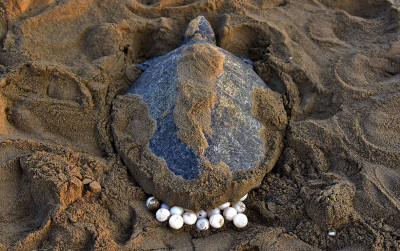
Image result for sea turtle laying eggs
Figure 2: Female loggerhead laying eggs on a Mediterranean beach

Lecturer Marta Pascual states "Our study reveals the breeding behavior of the Caretta caretta marine turtle to be more complex. In most populations, females turtles are not the only ones with philatropic behavior: males also mate near nesting beaches." To get these conclusions, the UB-IRBio team increased the number of microsatellite markers to analyze gene flow among turtle populations in the Mediterranean area. Their results showed that there was a higher gene differentiation in the nesting beaches in the Mediterranean. This suggested to them that there is a possibility that turtles breed in feeding areas or during their journey towards nesting beaches. Marta then continues to say "Also, if we compare mitochondrial and nuclear markers, we can compare the spreading behavior of male and female turtles in different areas, which shows complex and particular breeding behavior in each area." Philopatry happens in both male and female turtles. There are times though were there is breeding patterns between males and females in locations other than their birth place.

One problem that can factor into this is that breeding behavior can change depending on the population and sexes within the population. The temperature that the eggs are incubated at determines their sex. If the temperature is high, there will only be female turtles when hatching happens. Since the global temperatures are rising, this is causing more females to be born than males, which is upsetting the balance within populations.

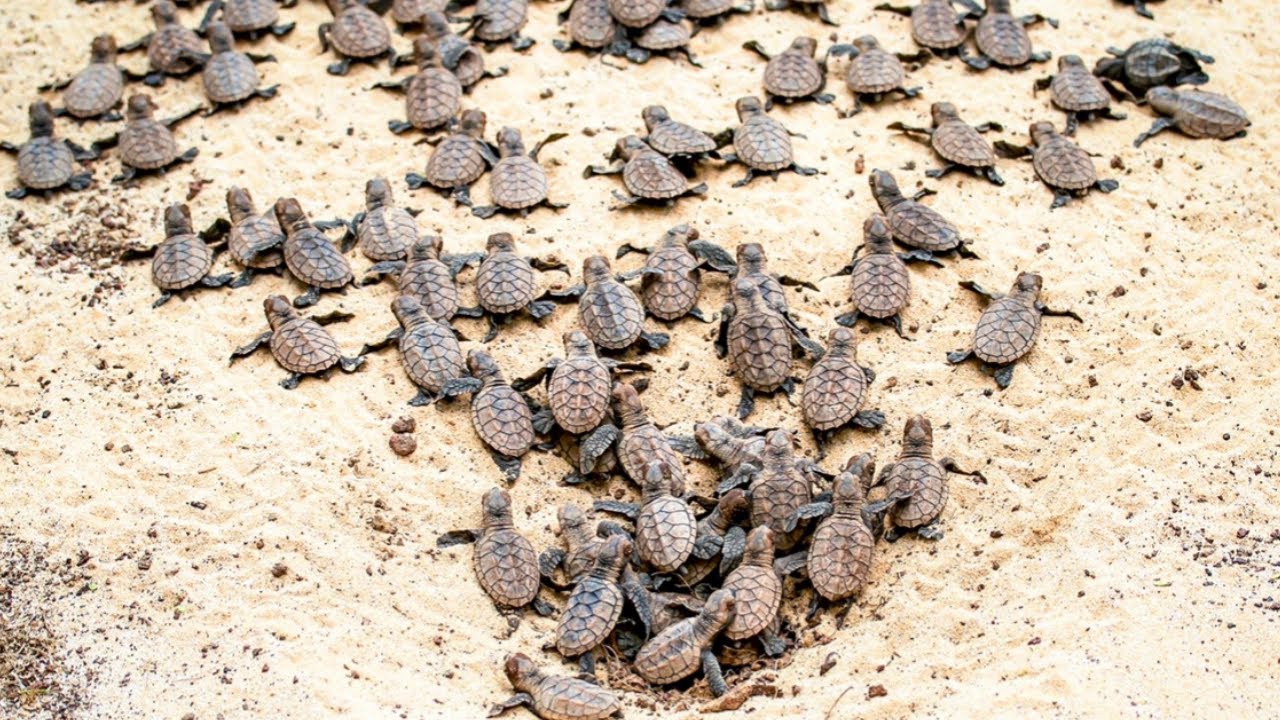
Image result for sea turtles hatching
Figure 3: Loggerhead sea turtle hatchlings

The ending to this article talked about protecting the species of turtles in the Mediterranean. They said that the genetically differentiated units should be protected. In some cases, the population size is very large, but in most cases, the populations are much smaller. Lastly, they stated that there needs to be more comprehensive studies of different areas to identify bottlenecks and to study the impact of the increase of variability.

Sources:

Universidad de Barcelona. "Male loggerhead turtles also go back to their nesting beaches to breed." ScienceDaily. ScienceDaily, 14 March 2018. <www.sciencedaily.com/releases/2018/03/180314092710.htm>

M Clusa, C Carreras, L Cardona, A Demetropoulos, D Margaritoulis, AF Rees, AA Hamza, M Khalil, Y Levy, O Turkozan, A Aguilar, M Pascual. Philopatry in loggerhead turtles Caretta caretta: beyond the gender paradigmMarine Ecology Progress Series, 2018; 588: 201 DOI: 10.3354/meps12448

Images from: Google images