
Figure 1: Male loggerhead traveling inland to breed
A new study from the Faculty of Biology and the Biodiversity Research Institute of the University of Barcelona (IRBio) showed that most male loggerhead turtles go back to nesting beaches to breed, which is a common behavior among female turtles. This study was published in the journal Marine Ecology Progress Series because it breaks the normal paradigm on breeding behavior in these marine turtles and because it also explains how the species itself could also breed in feeding areas or during their travels towards the nesting beaches. The new paradigm that these researches created was that male turtles (Caretta caretta) return to the nesting beachs to breed.
Caretta caretta is a marine species of sea turtle that predominantly lives in tropical and temperate areas around the world. In the eastern Mediterranean, sea turtles nest along the coasts of Greece, Turkey, Cyprus, Libya, Lebanon, and Israel. It was believed before that only female turtles went back to the nesting areas to lay eggs after mating with the male turtles. In the test called philatropic: behavior studies, there is detection, marking, and a genetic study of these female turtles that travel back to the beach to lay eggs.

Figure 2: Female loggerhead laying eggs on a Mediterranean beach
Lecturer Marta Pascual states "Our study reveals the breeding behavior of the Caretta caretta marine turtle to be more complex. In most populations, females turtles are not the only ones with philatropic behavior: males also mate near nesting beaches." To get these conclusions, the UB-IRBio team increased the number of microsatellite markers to analyze gene flow among turtle populations in the Mediterranean area. Their results showed that there was a higher gene differentiation in the nesting beaches in the Mediterranean. This suggested to them that there is a possibility that turtles breed in feeding areas or during their journey towards nesting beaches. Marta then continues to say "Also, if we compare mitochondrial and nuclear markers, we can compare the spreading behavior of male and female turtles in different areas, which shows complex and particular breeding behavior in each area." Philopatry happens in both male and female turtles. There are times though were there is breeding patterns between males and females in locations other than their birth place.
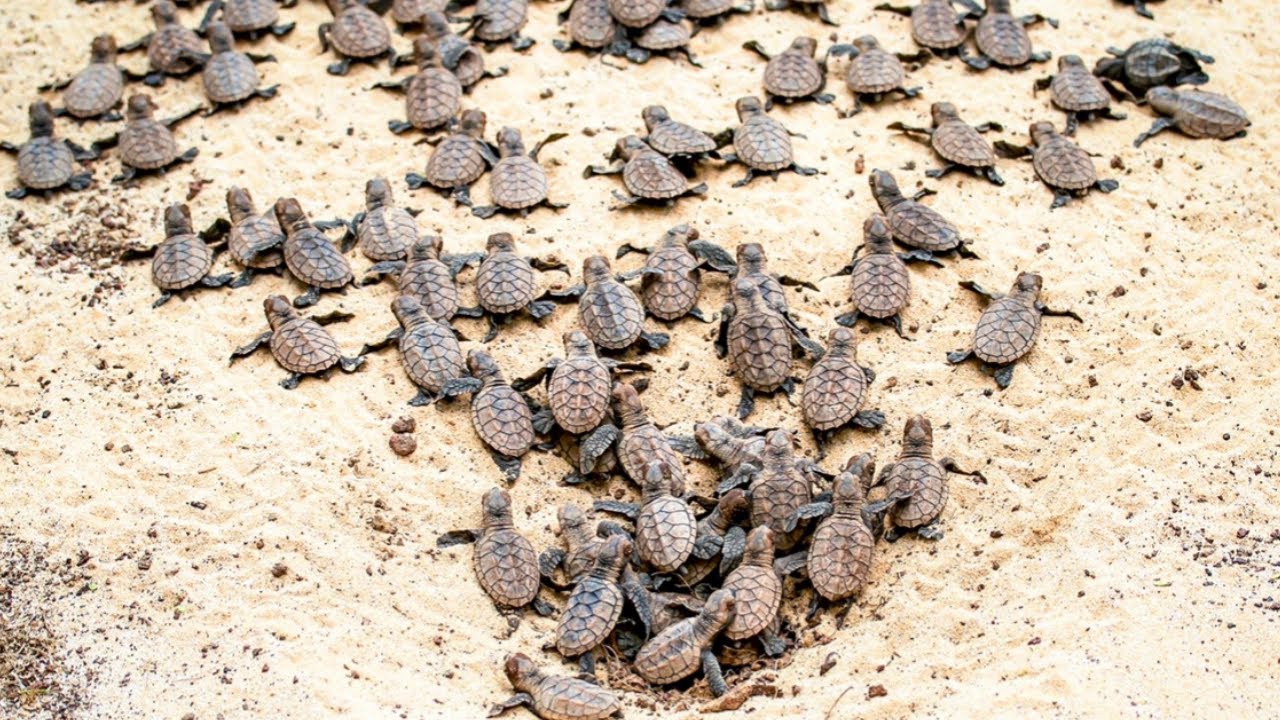
One problem that can factor into this is that breeding behavior can change depending on the population and sexes within the population. The temperature that the eggs are incubated at determines their sex. If the temperature is high, there will only be female turtles when hatching happens. Since the global temperatures are rising, this is causing more females to be born than males, which is upsetting the balance within populations.
The ending to this article talked about protecting the species of turtles in the Mediterranean. They said that the genetically differentiated units should be protected. In some cases, the population size is very large, but in most cases, the populations are much smaller. Lastly, they stated that there needs to be more comprehensive studies of different areas to identify bottlenecks and to study the impact of the increase of variability.
Sources:
Universidad de Barcelona. "Male loggerhead turtles also go back to their nesting beaches to breed." ScienceDaily. ScienceDaily, 14 March 2018. <www.sciencedaily.com/releases/2018/03/180314092710.htm>
M Clusa, C Carreras, L Cardona, A Demetropoulos, D Margaritoulis, AF Rees, AA Hamza, M Khalil, Y Levy, O Turkozan, A Aguilar, M Pascual. Philopatry in loggerhead turtles Caretta caretta: beyond the gender paradigm. Marine Ecology Progress Series, 2018; 588: 201 DOI: 10.3354/meps12448
Images from: Google images
One problem that can factor into this is that breeding behavior can change depending on the population and sexes within the population. The temperature that the eggs are incubated at determines their sex. If the temperature is high, there will only be female turtles when hatching happens. Since the global temperatures are rising, this is causing more females to be born than males, which is upsetting the balance within populations.
Figure 3: Loggerhead sea turtle hatchlings
The ending to this article talked about protecting the species of turtles in the Mediterranean. They said that the genetically differentiated units should be protected. In some cases, the population size is very large, but in most cases, the populations are much smaller. Lastly, they stated that there needs to be more comprehensive studies of different areas to identify bottlenecks and to study the impact of the increase of variability.
Sources:
Universidad de Barcelona. "Male loggerhead turtles also go back to their nesting beaches to breed." ScienceDaily. ScienceDaily, 14 March 2018. <www.sciencedaily.com/releases/2018/03/180314092710.htm>
M Clusa, C Carreras, L Cardona, A Demetropoulos, D Margaritoulis, AF Rees, AA Hamza, M Khalil, Y Levy, O Turkozan, A Aguilar, M Pascual. Philopatry in loggerhead turtles Caretta caretta: beyond the gender paradigm. Marine Ecology Progress Series, 2018; 588: 201 DOI: 10.3354/meps12448
Images from: Google images


