Showing posts with label algae. Show all posts

Tuesday, March 18, 2014

Algae Biodiesel: A Viable Alternative

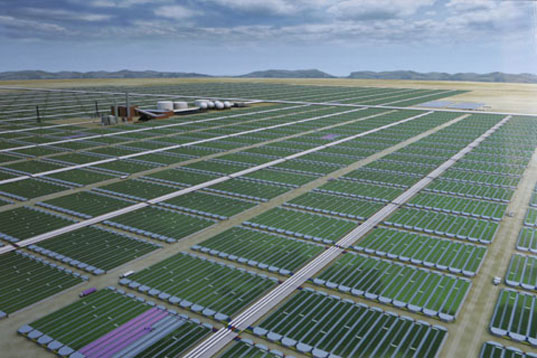
The search for an alternative energy source to oil is one of the most pressing issues right now. Whether it be solar, wind, or nuclear, people are constantly looking for a new source of fuel and energy for the future. However, in recent years, biofuels are becoming more and more viable as a resource. And one of the most promising fields is in algal biodiesel, a lipid compound that is extracted from algal cells.


However, one needs to think of the potential ramifications of such a fuel. What are the potential ramifications it could have on global climate change, a situation that is already in a bad state? Fortunately, it seems that biodiesel will not impact climate change in a negative way.

But the real question is the total energy amount that can be extracted from the biodiesel. If it's not a good fuel source, than there is no point in even trying to harness it. And if more energy is spent extracting the lipid from the algae than what is gained, there is no point either.While the technology to extract biodiesel is still in a prototypical phase, there seems to be a lot of room to improve and grow, meaning that in the end, biodiesel could be a long-term solution to the ever growing fuel crisis.

Source 1: http://www.sciencedirect.com/science/article/pii/S0958166911007099

Source 2: http://pubs.rsc.org/EN/content/articlehtml/2011/ee/c1ee01791h

Source 3: http://link.springer.com/article/10.1007/s11367-010-0194-1

Tuesday, April 20, 2010

Algae-powered cars

About seven months ago, Rebecca Harrell and Josh Tickell, co-founders of the Veggie Van Organization and producer of the upcoming film FUEL, attempted to drive across the U.S. with just 25 gallons of gas.

It sounds crazy, but it actually worked with only 50 gallons of gas!

The “Algaeus” (a tricked-out hybrid Toyota Prius) gets 150 mpg because it runs on an algae-based biofuel.


Sapphire Energy says it will soon be producing green fuel that can compete with fossil fuels cost-wise.

Sources: [1] http://www.inhabitat.com/2009/09/09/first-algae-powered-car-attempts-to-cross-us-on-25-gallons/
[2] http://en.wikipedia.org/wiki/Sapphire_Energy

Tuesday, February 9, 2010

Photosynthetic animals?

Sure, there are protists that can eat when sunlight is low, and turn on the solar panels on a nice sunny day.  But those single-celled protists are so "simple".  Surely no animal can pull off this metabolic feat?  Leave it to marine slugs (gastropod mollusks) to eat algae and use their chloroplasts as photosynthetic engines.  But even cooler, these sea slugs are able to make their own chlorophyl because algal genes have moved horizontally into their genome.

This is the first evidence that chlorophyl encoding genes can be transferred from a protist into a eukaryotic genome.  This type of horizontal gene transfer is common among bacteria, but rare in animals.  You can hear an interview with the lead author of the paper on the best science show on radio.

Thursday, February 4, 2010

Iron rich soil in Australia plays a part in the growth of destructive Algal blooms


Australians are well aware of how algal blooms negatively effect their economy. Many scientists are studying how Australia's iron rich soil contributes to the growth of this foul smelling, fish killing algae. It is known that iron is a factor in the growth of these algal blooms, but the mechanism is not entirely understood. Scientists are approaching this question with a team of microbiologists, geochemists, and hydrologists using each of their fields to understand the growth of the destructive algae. Microbiologists are studying two types of bacteria in the water that feed on iron. One type of bacteria changes the iron into a dissolved state and the other oxidizes the iron into an insoluble form that can settle on the bottom of a creek. The oxidizing bacteria seems to make the iron less available as a contributor to the algal blooms. The two bacteria usually balance each other, but sometimes this balance is upset. This is still under investigation. Geologists are studying the iron content in the soil in search for possible mechanisms that contribute to algal growth. Hydrologists are studying the water flow to figure out how the iron gets from the soil into the water and the chemical reactions that take place when the soil hits the water. The efforts to understand the mechanism behind algal growth and how iron rich soil contributes to it may help improve Australia's economy as well as aquatic life.


Source:http://www.sciencedaily.com/releases/2010/01/100128101855.htm